
THE APEXAL PLATFORM

FROM COMPUTATIONAL HYPOTHESIS TO PHYSICAL EVIDENCE

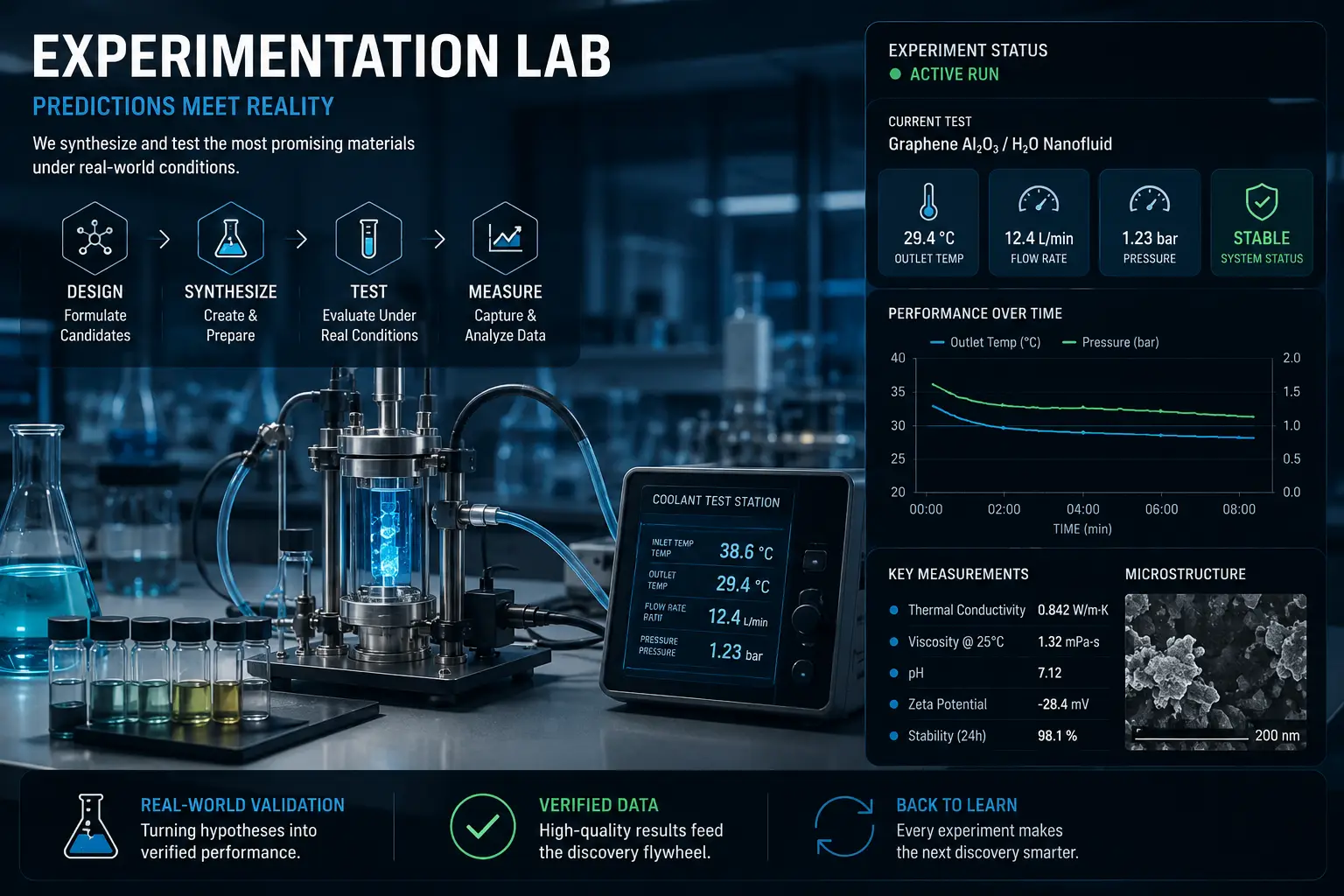
Modern AI can search scientific knowledge, generate hypotheses, and help predict material and system behavior. But a computational prediction is not physical evidence.

The challenge is determining whether a predicted material, formulation, geometry, or operating condition performs under real-world constraints.

Apexal is being developed to coordinate the discovery workflow—from scientific evidence and computational exploration to experimental planning, validation, and learning.

Apexal is being built to orchestrate the entire loop.

The Discovery Workflow

THE COMPLETE SCIENTIFIC DISCOVERY LOOP™

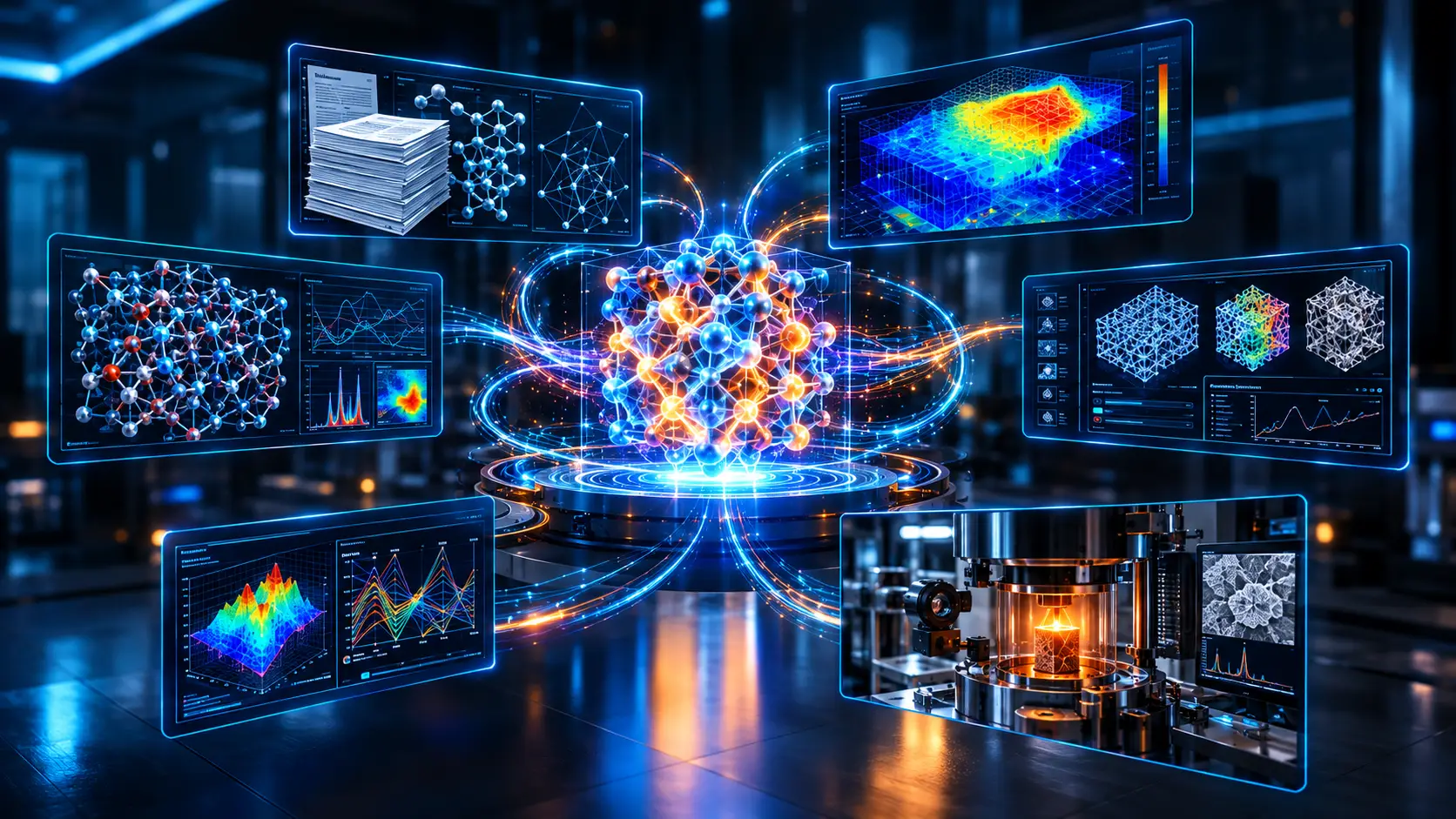
Apexal is an AI-native scientific and engineering platform designed to coordinate specialised computational and experimental reasoning across the discovery lifecycle.

Its architecture connects scientific knowledge retrieval, physics-informed modelling, candidate design, experimental planning, validation, and continual learning.

Each validated experiment can provide evidence to inform subsequent models, hypotheses, and engineering decisions.

Apexal treats scientific discovery not as the output of a single AI model, but as a coordinated workflow that connects computational insight with physical evidence.

SIX SPECIALISED AGENTS. ONE SCIENTIFIC WORKFLOW™

01 — DISCOVER

Turn scientific literature into structured knowledge.

Extracts scientific information from literature and organises it into queryable knowledge structures that can support downstream reasoning.

02 — SIMULATE

Model the physical system.

Uses computational approaches such as physics-informed neural networks, density functional theory and molecular dynamics to investigate candidate behaviour and estimate properties with uncertainty.

03 — DESIGN

Navigate the design space.

Uses optimisation and active-learning approaches to explore candidate formulations and identify promising regions of a high-dimensional design space.

04 — EXPERIMENT

Translate hypotheses into testable protocols.

Generates structured experimental plans, considers validation cost and duration, and produces confidence-based Go/No-Go recommendations.

05 — VALIDATE

Compare prediction with physical evidence.

Evaluates experimental measurements against computational predictions and characterises prediction error and model reliability.

06 — LEARN

Feed evidence back into the system. 

06 — LEARN

Feed evidence back into the system.

Uses simulation results and experimental evidence to refine models, update design spaces, and inform subsequent discovery cycles.

EVERY EXPERIMENT CAN MAKE THE NEXT DISCOVERY BETTER.

Scientific knowledge informs models. Models generate hypotheses. Optimisation identifies promising candidates. Experiments produce physical evidence. Validation measures the gap between prediction and reality. That evidence then feeds the next cycle.

Over time, the loop can transform experimental results into structured scientific knowledge that compounds across investigations.

The Sim2Real Loop: THE PHYSICAL WORLD IS THE ULTIMATE BENCHMARK.

Apexal treats simulation as a powerful instrument — not the final authority.

Computational models can narrow the search space, estimate behaviour and identify promising candidates. Physical experiments then test whether those predictions survive contact with reality.

The platform is designed around this transition:

HYPOTHESIS → SIMULATION → DESIGN → EXPERIMENT → MEASUREMENT → VALIDATION → LEARNING

The objective is not simply to generate more predictions.

It is to progressively increase the quality of the evidence behind engineering decisions.

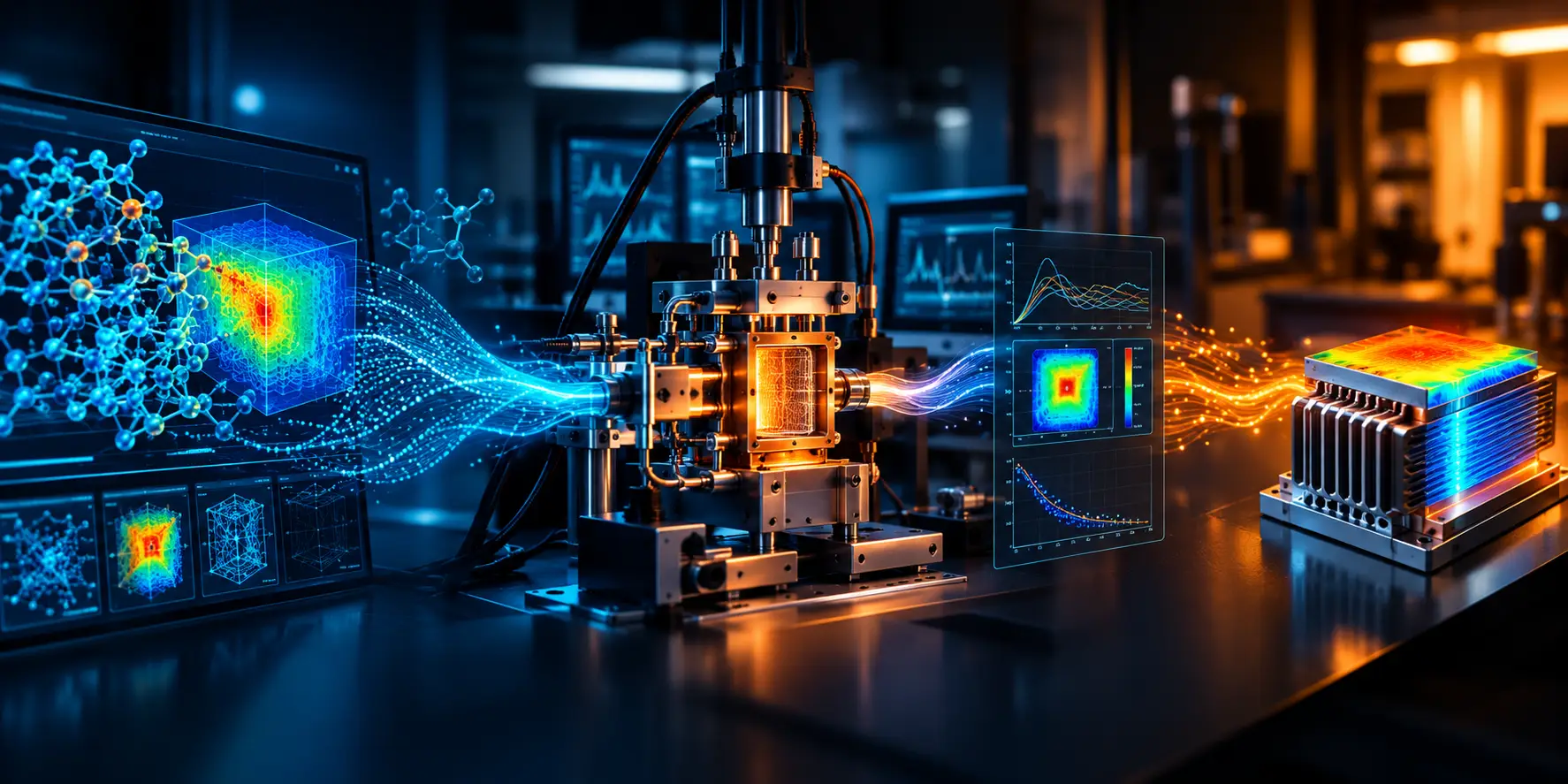
FROM SCIENTIFIC EVIDENCE TO EXPERIMENTALLY VALIDATED ENGINEERING SOLUTIONS.

Apexal orchestrates scientific knowledge, AI reasoning, simulation, materials discovery, optimisation and experimental validation to help researchers and industrial R&D teams investigate difficult engineering problems.