
Building Intelligence for the Physical World
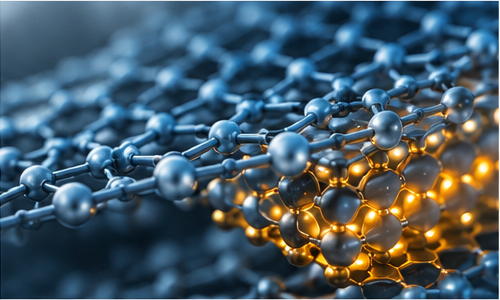
Engineering problems do not end with a promising prediction. A material, structure or operating condition must ultimately be evaluated against the physical constraints that determine its performance.
Apexal Advanced Materials is developing an AI-native scientific and engineering platform that connects scientific evidence, physics-based simulation, materials discovery and experimental planning.
Our mission is to help investigate difficult physical-world engineering problems through a disciplined approach that connects computational reasoning with measurable evidence.
WHY APEXAL EXISTS
Scientific Intelligence Must Meet Physical Evidence
Engineering problems do not end with a promising prediction. A material, structure or operating condition must ultimately be evaluated against the physical constraints that determine its performance.
Apexal is being developed to coordinate scientific knowledge, physics-based modelling, candidate design and experimental planning within a connected discovery process.
Our approach recognises an essential distinction: computational results can guide decisions, but experimental measurement is necessary to establish real-world performance.
Physical Intelligence
Apply scientific reasoning and physics-informed methods to complex engineering questions.
Evidence First
Distinguish established scientific knowledge, computational predictions, ongoing research and experimentally validated results.
Closed-Loop Discovery
A continuous cycle linking scientific evidence, simulation, experimentation and validation to refine models and accelerate materials discovery.
FROM INITIAL FOCUS TO BROADER APPLICATIONS
A Clear Starting Point. A Broader Engineering Vision.
Advanced Thermal Management
Apexal’s initial focus is difficult thermal-management problems associated with high-performance computing, advanced electronics and power-dense systems. These environments create demanding engineering questions around heat transfer, hotspots, material properties, interfaces and system-level performance. Our research direction centres on connecting scientific evidence, computational methods and structured experimentation to investigate these challenges.
Extending the Discovery Approach
The broader objective is to develop a scientific discovery approach that can extend to other materials and engineering challenges.Potential areas of application include batteries, power electronics, energy systems, mobility and advanced manufacturing. These are areas of potential application, not a claim that Apexal has already developed and validated solutions in each sector.
THE FOUNDER

FARAYI L. TEMERA
Founder & CEO
Two decades of maintaining mission-critical industrial equipment provided a practical perspective on the consequences of material failure, reliability challenges and demanding operating conditions.
That experience informs the direction of Apexal: connecting scientific knowledge, AI reasoning and physics-based engineering to investigate difficult physical-world problems. Apexal is being developed with an initial focus on advanced thermal management for high-performance computing, advanced electronics and power-dense systems, and a broader ambition to advance AI-enabled scientific and engineering discovery.
The guiding principle is simple: computational predictions can guide engineering decisions, but physical performance must ultimately be established through appropriate evidence and measurement.
COLLABORATION
Build With Apexal
Difficult engineering problems benefit from collaboration across scientific research, engineering practice and technology development.
Apexal welcomes conversations with research teams, universities, engineering organisations and technology partners interested in investigating challenging physical-world problems.
We are particularly interested in discussions that can help define testable questions, develop rigorous computational methods, plan experiments and establish appropriate validation pathways.
Research Partnerships
Explore opportunities to investigate scientific questions, develop methods and evaluate promising research directions.
Industrial Engineering Challenges
Discuss difficult thermal-management and materials problems where scientific reasoning and computational investigation may help inform engineering decisions.
Technology & Validation Partnerships
Explore complementary capabilities, experimental facilities and technical expertise that could support future research and validation work.